
The history of Corfu is a fascinating journey through ancient civilizations, powerful empires, and diverse cultural influences that have shaped the island’s unique identity. From Greek mythology and the legendary Phaeacians of Homer’s Odyssey to Venetian fortresses, British architecture, and UNESCO-protected landmarks, Corfu offers visitors a remarkable combination of history, culture, and tradition.
Corfu’s history dates back thousands of years and is closely connected with ancient Greek mythology. According to Homer’s Odyssey, Corfu is believed by many to be the island of the Phaeacians, where the hero Odysseus was welcomed by King Alcinous before returning to Ithaca.
The island’s strategic position in the Ionian Sea made it an important center of trade and naval power during ancient times. Archaeological sites and historical remains across Corfu reveal evidence of its significant role in the ancient Greek world.
One of the most visible influences on Corfu comes from the Venetian period, which lasted for more than four centuries. During this time, elegant buildings, narrow alleyways, impressive fortifications, and a distinctive architectural style transformed the island into one of the most unique destinations in Greece.
Walking through Corfu Old Town, visitors can admire Venetian mansions, charming squares, historic churches, and the famous Liston promenade, all reflecting the island’s long connection with Venice.
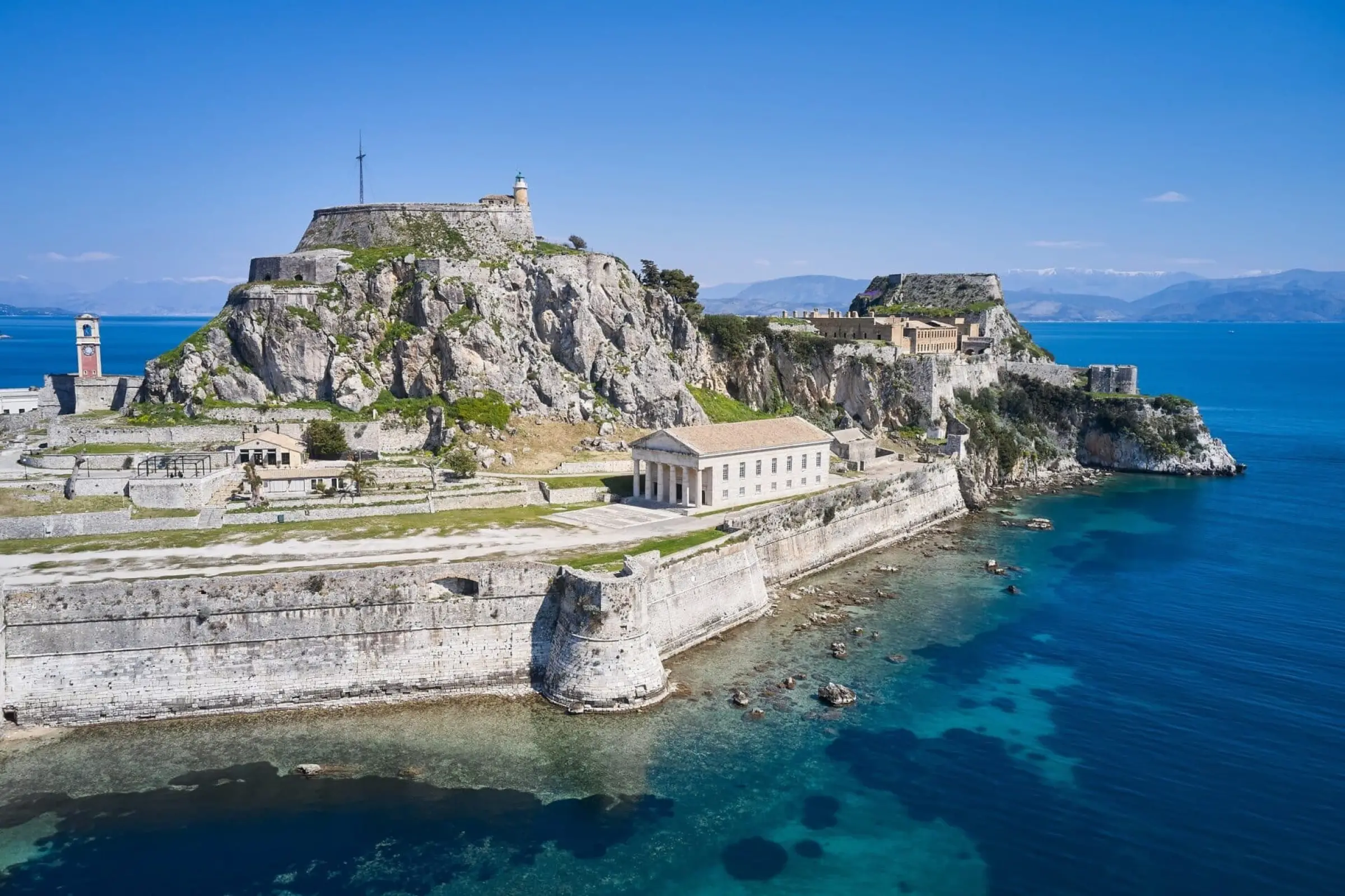
Corfu is home to impressive historical monuments, including the Old Fortress and the New Fortress, which were built to protect the island from invasions and played a vital role in its defense throughout history.
Today, the Old Town of Corfu is recognized as a UNESCO World Heritage Site thanks to its exceptional architectural value and the unique combination of Greek, Venetian, French, and British influences that can be seen throughout the city.
Following the Venetian era, Corfu experienced periods under French and British administration, both of which left their own mark on the island. The British period introduced important infrastructure projects, public buildings, and cultural institutions that continue to influence Corfu today.
Modern Corfu preserves this multicultural heritage through its traditions, museums, festivals, and famous musical culture, with the island’s philharmonic bands remaining an important symbol of local identity.
Beyond its monuments, Corfu’s cultural heritage lives through everyday traditions, religious celebrations, music, and local customs. The island is especially famous for its Easter celebrations, considered among the most spectacular in Greece, with processions, philharmonic performances, and centuries-old traditions attracting visitors from around the world.
Traditional villages, local cuisine, and community celebrations continue to preserve the authentic spirit of Corfu, allowing visitors to experience a living culture rather than a history found only in museums.
Thanks to its convenient location near Corfu Town and the island’s most important historical sites, Anita Village provides an excellent base for discovering the rich history and cultural treasures of Corfu. Guests can easily explore ancient landmarks, museums, fortresses, traditional villages, and historic neighborhoods while enjoying the comfort and peaceful atmosphere of the village.
From mythology and ancient civilizations to Venetian elegance and vibrant traditions, Corfu’s history tells the story of an island where different cultures have blended together to create one of the most fascinating destinations in the Mediterranean.